
On this page
01 How it works
An affiliate niche website is a small website about one clear topic — say, gear for balcony gardeners, home espresso for beginners or products for people with a new puppy. You publish helpful articles: honest reviews, side-by-side comparisons, “best for…” lists and how-to guides. Inside those articles you link to the products you recommend.
These are affiliate links: special links with your personal code in them. When a reader clicks and buys, the shop knows the sale came from you and pays you a commission — a share of the sale. The reader pays the same price. You never hold stock, never ship anything and never handle returns.
- Pick a niche
- Join affiliate programs
- Test products for real
- Write helpful pages
- Readers find you
- Reader buys via link
- You earn commission
Where do the readers come from? For years the answer was simple: Google. Today it’s more mixed — Google is still the biggest source, but Pinterest, YouTube, an email newsletter and AI assistants matter more and more. A healthy site has several legs to stand on. More on that in section 03.
Three ways to build it:
02 Is this for you?
- already love a topic, hobby or product area — or are happy to dive deep into one
- like trying things out and explaining them to others
- enjoy writing, taking photos or making short videos
- can work on something for many months before it pays
- want an asset that can keep earning while you sleep
- need money this month
- want to publish 500 AI articles and hope for the best
- don’t want to buy, borrow or test any products yourself
- can’t handle traffic ups and downs you don’t control
- would recommend anything, as long as it pays well
03 The “saturated” myth — and how search really changed
“Affiliate sites are dead.” You will read that a lot. It’s half true. What died is a certain type of affiliate site: the one where someone who never touched the product rewrites Amazon descriptions, adds “Top 10 best…” to the title and waits for Google traffic. Over the last years, Google has pushed those sites down again and again.
What changed at Google
- Helpful content first. Google’s core ranking updates now reward pages written for people, by people who know the topic. Google’s own quality guidelines use the idea of E-E-A-T: Experience, Expertise, Authoritativeness and Trust. The first “E” — first-hand experience — is exactly where thin affiliate sites fail.
- Reviews need proof. Google asks for reviews that show you actually used the product: your own photos, measurements, pros and cons, comparisons with alternatives and a clear verdict.
- Mass content is spam. Google’s spam policy on scaled content abuse targets pages produced in bulk mainly to rank — whether by AI, by humans or both — that add little value. Google keeps running spam updates that hit exactly this, including thin affiliate pages.
- AI answers on top. AI Overviews and AI Mode now answer many simple questions right in Google. Fewer people click through for “what is…” questions. Clicks are rarer, but people who do click often want deeper help before a purchase.
So where is the money now? With the sites that do what AI can’t: real testing, real photos, real opinions — and with sites that don’t depend on Google alone. Daniel Vice runs an affiliate business himself; his view is the same as with every other market: it’s not “full”, it just rewards niche research, quality and consistency.
Broad vs. sharp: what a good niche looks like
04 What AI changes
AI is a great assistant for a niche site — as long as it stays the assistant. It helps you find questions people ask, structure long articles, turn your messy test notes into clear text, create comparison tables and simple graphics, and polish your spelling. What it can’t do: hold the product, notice that the lid leaks, or tell your readers how the thing feels after three months.
Where AI hurts you: if you let it write whole reviews of products you never used, you’re building exactly the kind of site Google’s spam policies target. Readers notice too — generic text, no real details, no opinion. Use AI to go faster, not to fake experience.
05 Step by step — the complete process
All ten steps from idea to a growing site. Nothing held back. Plan a few weeks for setup and your first test pages — and many months for results.
This step decides most of your result, so take your time. A good niche has four things: people who buy, products you can test, questions that need more than a one-line answer and a topic you won’t get bored of in two years.
- Write down 10 topics you know, use or are curious about.
- For each: can you name 20 products people buy? Are there affiliate programs for them?
- Look at the top results on Google, YouTube and Pinterest. Are they big magazines, forums, or small sites like the one you’d build? Forums and thin pages ranking = opportunity.
- Check Reddit and Facebook groups: do people ask “which one should I buy?” again and again?
- Pick one. Narrow is better at the start — you can widen later.
You need a way to earn from your recommendations. There are three main routes:
- Amazon Associates — the easiest start: almost every product, trusted by buyers. Amazon has its own rules, e.g. a required disclosure line and a first review of your account after you make your first sales. Read the current Operating Agreement.
- Affiliate networks like Awin, Impact or CJ connect you with many brands and shops at once. You apply to each brand separately.
- Direct programs from shops and brands in your niche — often better terms, and you get to know the people behind them.
- Buy a short, brandable domain. Avoid putting product or brand names (“bestdysonvacuums”) in it — trademark trouble and it limits you.
- Use WordPress with a fast, lightweight theme — or a simple site builder if you prefer.
- Must-have pages from day one: About (who you are, how you test), Contact, Privacy, Affiliate disclosure.
- Make it load fast on phones. Most of your readers will be on mobile.
- Set up Google Search Console and a privacy-friendly analytics tool.
Collect the questions your buyers ask and sort them into a simple map:
- Guides (“how to set up a balcony tomato bed”) — build trust and bring people in.
- Single reviews (“I tested X for 6 weeks”) — deep, honest, with photos.
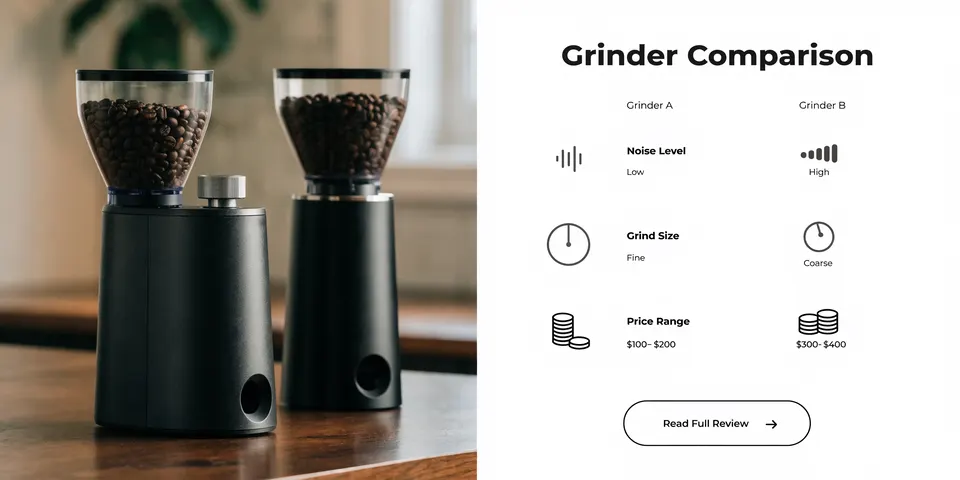
- Comparisons (“X vs. Y”) — very useful right before a purchase.
- Best-for lists (“best grinder for small kitchens”) — only with products you actually know.
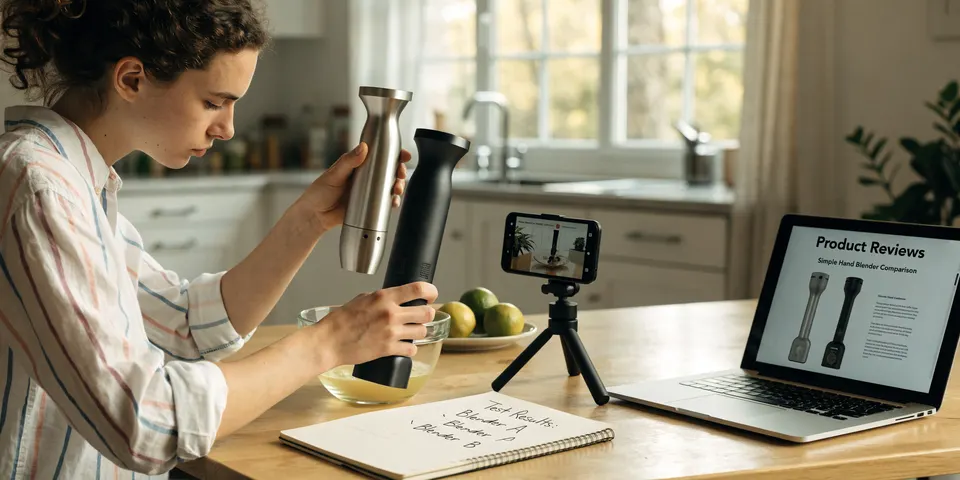
This is your biggest advantage over big publishers and AI. Honestly, it’s what made my own affiliate sites work. Buy, borrow or ask brands for samples (disclose it if you get something for free).
- Use the product like a real buyer would, over days or weeks.
- Take your own photos and short videos: unboxing, details, in use, problems.
- Measure what you can: time, noise, size, weight, battery.
- Write down the annoying things. Honest negatives build more trust than any praise.
- Keep a simple test sheet per product so your reviews have real data.
- Start with a short, clear verdict: who should buy it, who should skip it.
- Show your proof: your photos, your measurements, how long you tested.
- Compare with alternatives, including cheaper ones.
- Put the disclosure near the top, before the first affiliate link.
- Update pages when products change — and show the update date.
Readers — and Google — want to know who is behind a recommendation. Add a real author box, an honest About page and a “How we test” page. Show your face or your hands in some photos. You don’t need to be famous; you need to be real.
- Pinterest: very strong for home, garden, food, crafts and style. Each article can get several pins that send visitors for months.
- YouTube or short video: a short test video under each review is double proof — and a second channel.
- Communities: help people in forums and groups without spamming links. Being useful gets you noticed.
- AI assistants: clear, well-structured pages with real data are more likely to be quoted as a source in AI answers.
And your email list is the one traffic source nobody can take away. Offer something useful for free — a checklist, a buying guide, a setup plan — and send a short, honest newsletter regularly: what you tested, what you’d buy, what to avoid.
- Every few months, check which pages get visitors and clicks, and which don’t.
- Update your best pages first: new products, new photos, fresh verdicts.
- Delete or merge weak pages instead of piling up more thin content.
- Once one topic cluster works, add the next one — slowly and with the same quality.
- Over time, look for better-paying direct programs for your best-selling products.
06 Tools
Research first — it decides whether your site has a chance. Everything else is replaceable.
07 Realistic expectations
Honestly: this is a slow business. New websites often get very little search traffic for months, even with good content. Commissions per sale are usually small, so you need many readers who trust you. Search traffic also moves: a Google update or new AI features can raise or lower your visits overnight, even if you did nothing wrong. The people who make it treat the site like a long-term asset — they test real products, publish steadily, grow an email list and don’t rely on one traffic source. Judge your results over a year, not a month.
08 Tips & common mistakes
- Do: Only recommend products you have used — or say clearly when you haven’t.
- Do: Use your own photos in every review. They are proof and they build trust.
- Do: Start the email list on day one, not “later”.
- Do: Update your best pages regularly instead of only writing new ones.
- Avoid: Publishing hundreds of AI-written reviews of products you never touched.
- Avoid: Copying Amazon product descriptions or other people’s reviews.
- Avoid: Recommending whatever pays the highest commission instead of what’s best for the reader.
- Avoid: Hiding the affiliate disclosure at the bottom of the page — or skipping it.
09 Pros & cons
- No stock, no shipping, no customer service
- Low start costs
- A site can earn for years and can even be sold
- Your real hobby knowledge becomes an advantage
- AI speeds up research, writing and graphics
- Slow start — often many months without income
- Search traffic depends on Google and AI changes
- Programs can change terms or close at any time
- Real testing costs time and some money
- Commissions per sale are usually small
10 Risks & legal
- Disclosure (US): The FTC’s Endorsement Guides require a clear and conspicuous disclosure when you earn from a recommendation — near the link, not hidden in a footer. The FTC also has a rule against fake reviews and testimonials.
- Disclosure (EU / UK): Consumer protection law (in the EU the Unfair Commercial Practices Directive) bans hidden advertising. Commercial content must be recognisable as such; many countries expect labels like “Advertising” or “Affiliate link”. In Germany, courts are strict about this.
- Program rules: Each affiliate program has its own agreement — Amazon, for example, requires a specific disclosure statement and restricts how you show prices and links. Breaking the rules can mean closed accounts and lost commissions.
- Google spam policies: Mass-produced low-value content, fake reviews and copied content can get your pages or whole site pushed down or removed from search.
- Trademarks & copyright: Don’t use brand names in your domain, don’t copy product photos or texts without permission. Your own photos are safest.
- Honest reviews: Don’t claim you tested something you didn’t. If you got a product for free, say so.
- Privacy: Tracking, affiliate links and email sign-ups need a privacy policy and, in the EU, a proper cookie consent.
- Taxes: Commissions are income. Check with a tax advisor what applies where you live.
General information, not legal advice.
11 FAQ
Is affiliate marketing with a website still worth it with AI search?
Yes, but not the old way. Simple questions are often answered by AI now. What still works: real first-hand reviews, comparisons with your own data, and an audience that knows you — via email, Pinterest or YouTube. Sites that only rewrote other content are the ones that lost.
Can I use AI to write my articles?
Use it as an assistant: research, outlines, turning your notes into clean text, editing. Don’t let it invent experiences or write reviews of products you never used. Google’s spam policies target mass-produced low-value content, however it was made.
Do I have to buy every product I review?
No. You can borrow products, use what you already own, or ask brands for samples. What matters is that you really used it — and that you disclose free products.
How many articles do I need?
There is no magic number. 10–20 truly helpful pages beat 200 thin ones. Start small, see what works, and build around it.
Amazon or affiliate networks — where should I start?
Amazon Associates is the easiest start because it has almost everything. Networks like Awin or Impact and direct brand programs often suit specific niches better. Many sites use a mix.

The Niche Site Starter Kit
- Niche scorecard: 12 questions before you buy a domain
- Product testing template (photos, notes, verdict)
- Review & comparison page outlines
- Disclosure text examples for the US, UK and EU
- AI prompt pack for research, outlines and editing
- Email welcome sequence for your first subscribers