
On this page
01 How it works
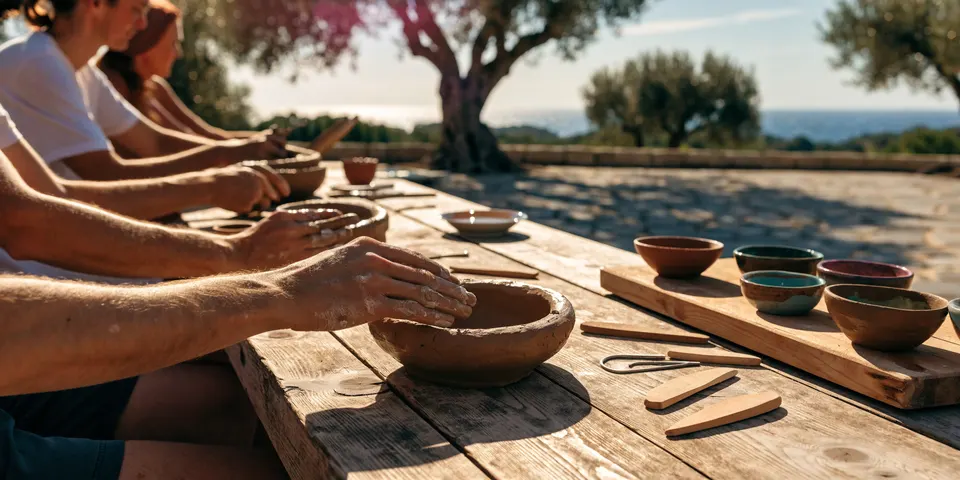
The more digital everyday life becomes, the more people look for the opposite: an evening at the potter’s wheel, a weekend of painting, a day in the woodworking shop. They don’t just buy a bowl or a picture — they buy the experience of making it themselves. If you master a craft, you can sell exactly that.
There are two levels. Local workshops: two to four hours, four to ten people, in your studio or a rented room. And creative retreats: several days somewhere beautiful — by the sea, in the mountains, on a finca — with your craft at the centre. Workshops are the safe start; retreats come later and have their own rules.
- Plan
- Flyer & page
- Bookings
- Teach
- Photos & reviews
- Next date
As a designer I see it all the time: brilliant craftspeople with a blurry phone photo and a flyer that nobody reads. Today you can get a clean flyer, a booking page and a week of posts in one evening with AI and Canva. The workshop is your art — the marketing no longer has to be your weak spot.
02 Is this for you?
- master a craft well enough to explain it to beginners
- enjoy people, patience and a bit of chaos at the table
- have a studio, a workshop or access to a suitable room
- like to host — coffee, music, a good atmosphere
- want to use AI for the marketing, not for the craft
- prefer to work alone and in silence
- get nervous when beginners make mistakes
- can’t work on evenings and weekends
- would sell a retreat with accommodation without checking the rules
- want passive income — every workshop needs you
03 Workshop or retreat? Know the difference
Both are teaching your craft — but legally and financially they are two different things. Start with workshops and only add retreats once your workshops are booked out.
04 What AI changes
AI changes nothing about your craft — and almost everything about how people find you. The marketing work that used to eat whole weekends now takes an evening.

05 Step by step — from first workshop to retreat
All ten steps. Steps 1 to 8 are your first workshop, steps 9 and 10 are for growing.
One clear result participants take home — a bowl, a cutting board, a small painting, a hand-bound notebook. Two to four hours, a maximum of six to ten people. Beginners want success, not perfection: choose a project that works the first time.
Material, firing or drying, room rent, your preparation and clean-up, tools that wear out, insurance. Then look at what similar workshops nearby cost.
Invite friends or neighbours for free or at cost. Time every phase, note where people get stuck, and take real photos — they’re your first marketing material. Ask for honest feedback and a short quote you may use.
Open a flyer template in Canva, swap in your best real photo, your colours and the text from step 4. Shorten it to the essentials: what, when, where, price, how to book — plus a QR code to the booking page. Hang flyers in cafés, shops, libraries and tourist information offices.
One page is enough: photos, course text, dates, price, a booking button, imprint and privacy policy. Use a ticketing tool like Eventbrite or the booking feature of your website builder. And create a free Google Business Profile so people nearby find you — our guide to Google Business Profile shows how.
Instagram with real photos and short videos of hands at work. Local partners: cafés, hotels, holiday flat owners, tourist offices. Platforms like Airbnb Experiences have their own requirements — for example several years of hands-on experience, plus licences and insurance — so check them before you apply.
Start with a short safety briefing, keep breaks and coffee ready, plan buffer time. Ask before you photograph participants and before you post photos with faces. After the workshop, send a thank-you email with care tips for their piece and a link to leave a review.
Once a workshop works: private groups, team events for companies, children’s birthdays, gift vouchers for Christmas and birthdays, a series of four evenings for those who want more. Vouchers in particular bring money in before the busy season.
Start with a partner: a hotel, a finca or a guesthouse that sells the accommodation while you sell the course — or a tour operator that organises everything. Plan a mix of making, free time, good food and the place itself.
06 Tools
For the craft you already have your tools. For marketing, a few free or cheap ones are enough.
07 Realistic expectations
Two or three workshops a month bring a solid side income; full-time teaching needs a studio, regular dates and a good reputation. You’ll definately have a quiet month or two — summer, holidays, bad weather. Retreats bring more per booking but also more work and responsibility.
What it can look like — a worked example
Invented example numbers. Not every date fills up — plan with your minimum number of participants, not with a full table.
08 Tips & common mistakes
- Do: Choose a project that works for beginners the first time.
- Do: Set a minimum number of participants and clear cancellation terms.
- Do: Use real photos — your studio, your hands, your pieces.
- Do: Sell vouchers before Christmas and holidays.
- Avoid: Selling a retreat with accommodation without checking the package travel rules.
- Avoid: Pricing only the material and forgetting your time.
- Avoid: Posting photos of participants without asking.
- Avoid: Making the workshop too long and too ambitious.
09 Pros & cons
- The human premium grows with every AI image
- Low start costs if you have a studio
- Happy participants bring friends
- AI takes over most of the marketing work
- Retreats combine work and beautiful places
- Every workshop needs you in person
- Evenings, weekends and seasons
- Material, room and insurance cost money
- Retreats bring legal duties and organisation
- Income is limited by your time
10 Risks & legal
- Package travel: a retreat that combines accommodation with your course as the main feature is usually a package holiday (§ 651a German Civil Code) — with duties like insolvency protection for prepayments (§ 651r). Work with a hotel or tour operator, or let participants book accommodation themselves, and get advice first.
- Insurance: get business liability insurance that covers workshops — clay, kilns, knives, chisels and hot glue all have risks. Keep a first-aid kit at hand.
- Safety: give a safety briefing at the start, use materials suitable for beginners and children, and make sure the room meets the rules for the number of people.
- Cancellations: for leisure events on a fixed date, consumers in Germany usually have no 14-day withdrawal right (§ 312g German Civil Code) — but you need clear cancellation and minimum-participant terms before people book.
- Photos: ask before taking and posting photos of participants — especially of children.
- Registration and tax: teaching can sometimes count as freelance work, selling material or finished pieces is usually a trade. Ask your tax office and use the small-business VAT rule if it fits.
- Abroad: if you run retreats in another country, check the local rules for business, tourism and tax there.
General information only, not legal or tax advice. Rules differ by country and change — check the official pages and ask a tax adviser or lawyer, especially before your first retreat.
11 FAQ
Do I need a teaching qualification?
Usually not for leisure workshops. What matters is that you master your craft, can explain it simply and keep people safe. A trial run with friends shows you quickly whether teaching suits you.
How much can I charge?
That depends on craft, region and what’s included. Calculate material, room, your time and a margin, then compare with similar offers nearby. Many charge more for small groups and private bookings.
Do I need my own studio?
No. Many start in rented rooms, co-working spaces, cafés after hours or community centres. Kilns and special machines can sometimes be used in a shared workshop.
How do I find participants?
Real photos on Instagram, flyers with a QR code in local shops, a Google Business Profile, cooperation with hotels and tourist offices — and happy participants telling their friends.
Can I run a retreat abroad, e.g. in Cyprus?
Yes, but check the package travel rules and the local rules. The easiest start: a hotel or local partner sells the accommodation, you sell the course.
What does AI actually do for me?
Course texts, flyer texts, website copy, post plans, participant emails, price calculations and retreat programmes. The craft, the atmosphere and the photos stay real.
What if too few people book?
Set a minimum number of participants, say in your terms when you’ll cancel, and offer an alternative date or a refund. Vouchers and private groups smooth out quiet months.
Do I need to register a business?
Usually yes, once you do it regularly for money. Whether it counts as freelance teaching or a trade depends on the details — ask your tax office.
The Workshop & Retreat Kit
- Workshop planner: format, flow & material list
- Price calculator per participant
- AI prompt pack: course text, flyer, website, posts
- Flyer & social media checklist for Canva
- Participant emails: confirmation, prep, follow-up
- Retreat check: package travel, partners, insurance