On this page
01 How it works
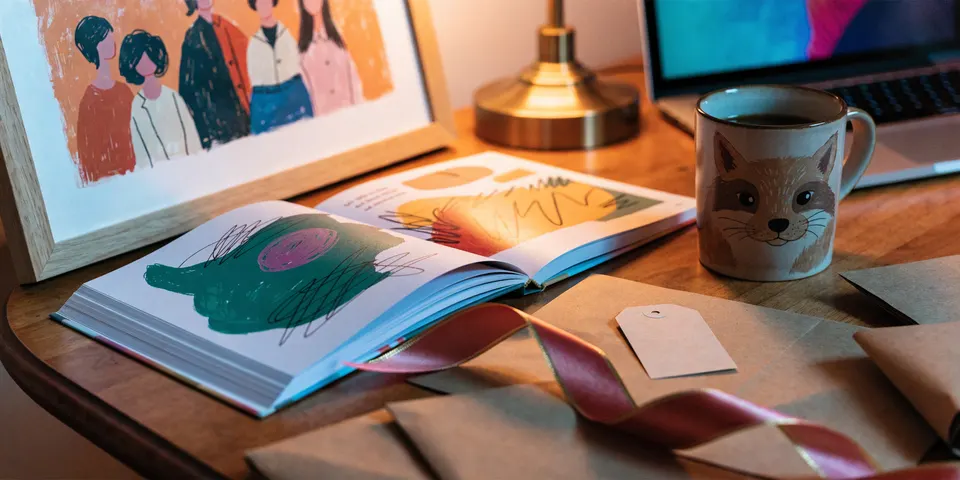
A customer orders a gift for a special person — and sends you photos and a few details. You create something unique from it: an illustrated portrait of the family, the pet as an oil painting, a poster of the place where a couple met, a short picture book with the child as the hero. The customer approves a preview, and a print partner prints the poster, mug, canvas or book and ships it directly to the customer.
The money isn’t in the AI picture itself — anyone can make one. It’s in your style, your care with the details and a simple ordering process. People pay for a gift that looks great, arrives on time and makes someone cry a little at the party. If music is more your thing, our guide to personalized songs shows the same idea with songs.
- Occasion
- Photos & details
- Design
- Preview
- Delivery
02 Is this for you?
- have an eye for design and like to perfect details
- enjoy working with AI image tools every day
- like the idea of making people happy with a gift
- can work reliably to deadlines, especially in December
- are patient with customer wishes and corrections
- want to sell Disney, Pixar or anime characters
- think one AI click is a finished product
- can’t handle a stressful December
- don’t want to deal with privacy and customer photos
- expect income evenly spread over the year
03 Before you start: rights and privacy
Personalized gifts are made from other people’s photos and personal stories. That’s what makes them special — and why a few rules matter more here than in other shops.
04 What AI changes
Before AI, a hand-drawn family portrait took a day — and cost accordingly. Today you can create a first draft in minutes and spend your time on what really counts: the likeness, the details and the finish.
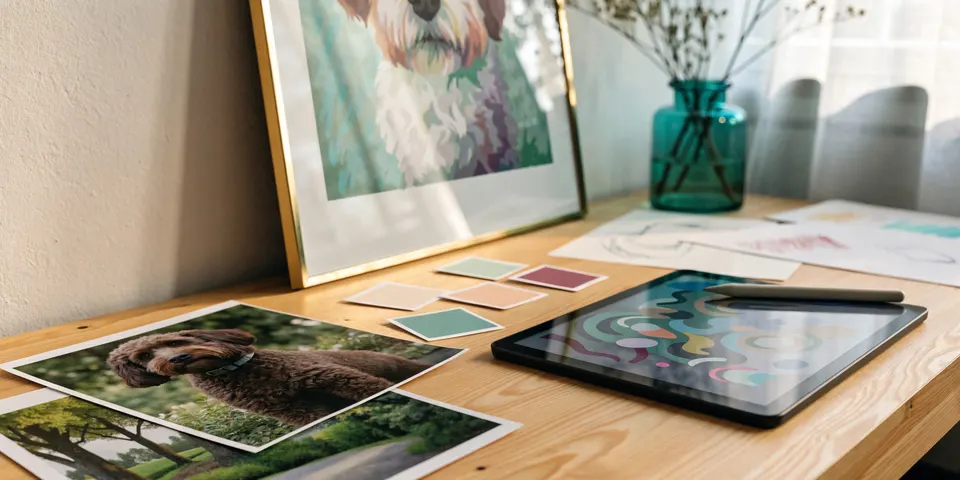

With my cookbooks I noticed that the pages people react to most are never the perfect food photos — they’re the little personal stories next to the recipes. Personalized gifts work the same way. Nobody cares whether the portrait would hang in a museum. Everyone cares that the dog has the spot on its ear in exactly the right place.
05 Step by step — from the first gift to a small shop
All ten steps. Steps 1 to 5 build your product and your basics, steps 6 to 10 bring orders and repeat customers.
Start with one product, not ten: pet portraits for pet owners, family portraits for grandparents, picture books for births, couple posters for weddings. One clear product makes your shop easy to understand and your work faster.
Test different styles until you have one that looks good, is recognisable and works with many photos: watercolour, flat illustration, a children’s book look, classic oil painting. Write a style guide with your prompt structure, colours, typical mistakes and how you fix them.
Check the terms of your AI tools for commercial use. Order samples from two print partners — paper, colours and packaging differ a lot. Partners with production in the EU deliver faster and avoid customs for customers in Germany.
Production and shipping, platform fees, your AI tools, your time per order (incl. corrections) and a buffer for reprints. Personalized gifts can and should cost more than standard prints — you sell the work, not the paper.
Register a business (Gewerbe) and decide on the small-business rule. Then prepare imprint, terms, a privacy policy that explains how you handle customer photos, and a clear note that personalized goods are excluded from the withdrawal right.
Collect everything you need in one go: photos (with a short guide what makes a good photo), names, dedication, style choice, size, deadline — plus a checkbox that the customer has the rights to the photos and agrees to how you use them. Every missing detail later costs you an email and a day.
Show 3 to 5 real examples (with permission or made from your own photos), a before-and-after with the original photo, the product in a room and a clear step-by-step of how ordering works.
Send every customer a preview before printing — with one included correction round. Only print after the written OK. That protects you from expensive reprints and gives customers the feeling of being involved.
Christmas, Mother’s Day, Father’s Day, Valentine’s Day, weddings and births are your main seasons. Prepare listings and ads 8 to 10 weeks ahead and show a clear last order date for every holiday — print partners need time, especially in December.
Add products that fit your first one: the same portrait as a mug or puzzle, a digital file for printing at home, sets for families. Companies can be good customers too — for staff and client gifts. Keep a mailing list, because people who ordered once come back for the next birthday.
06 Tools
You need an image tool with commercial rights, a design tool and a print partner. Everything else comes later.
07 Realistic expectations
Outside the seasons you’ll get a few orders a week at most when starting. From October on, it can suddenly become a lot — and that’s when your order form, your style guide and your print partner have to work without hiccups.
What it can look like — a worked example
Invented example numbers for a framed-look poster with the small-business rule (no VAT). Your time per order — usually 30 to 60 minutes with corrections — isn’t included. Higher prices for picture books or canvas improve the maths a lot.
08 Tips & common mistakes
- Do: Show a preview before every print and get a written OK.
- Do: Write down your style so every order looks the same quality.
- Do: Test print partners with your own samples.
- Do: Show clear last order dates before every holiday.
- Avoid: Famous characters or “in the style of” a brand.
- Avoid: Printing without checking hands, eyes and text in the image.
- Avoid: Keeping customer photos forever.
- Avoid: Starting your Christmas preparation in December.
09 Pros & cons
- No stock thanks to print on demand
- Customers pay more for personal gifts
- AI makes each order much faster
- Many occasions all year round
- Happy customers order again for the next birthday
- Very seasonal, stressful December
- Lots of competition with generic AI pictures
- Corrections and customer wishes take time
- Print partners can be late or make mistakes
- Rules for photos and characters need care
10 Risks & legal
- Privacy: customer photos are personal data. Explain in your privacy policy how you use them, delete them after the order and check whether your AI tools use uploads for training.
- Rights: only use photos the customer is allowed to use. No protected characters, brand logos or designs “in the style of” well-known brands.
- AI terms: use paid plans with commercial rights and keep a record of which tool you used for which order.
- Withdrawal right: personalized goods are excluded from the 14-day withdrawal right (§ 312g BGB) — but defects still have to be fixed. Inform customers before the order.
- Business and tax: register a business, keep receipts and decide on the small-business rule. Platforms report sales to the tax office.
- Platform rules: Etsy requires you to disclose AI use. Listings without it can be removed.
- Deadlines: if a gift arrives after Christmas, the customer is angry no matter whose fault it was. Plan buffers and be honest about delivery times.
General information only, not legal or tax advice. Check the current platform rules and get advice from a lawyer or tax advisor before you start.
11 FAQ
Can I really sell AI-made gifts?
Yes, if your AI tool allows commercial use (usually in a paid plan), you don’t use protected characters or brands, and you’re open about using AI. On Etsy that’s required.
Who owns the copyright?
Pure AI output is usually not protected by copyright in Germany. Your own editing, layout and texts can be. For a personal gift that rarely matters — but don’t promise customers exclusive rights.
Do customers have a right to return?
Goods made to the customer’s specifications are excluded from the 14-day withdrawal right. If the product has a defect, you still have to fix or replace it.
Which products sell best?
Pet portraits, family and couple portraits, picture books for children, wedding and birth posters. Prices between €30 and €90 are typical, picture books more.
How do I handle children’s photos?
Only from parents or with their consent, only for the order, delete them afterwards and never show them in your shop without written permission.
Do I need my own stock?
No. Print-on-demand partners produce every item after the order and ship it directly. You only pay for what you sell — plus a few samples.
Can I offer digital files only?
Yes, as a cheaper option for home printing. For digital content the withdrawal right expires when the download starts, if the customer agreed to it beforehand.
How do I stand out from other AI gift shops?
With a recognisable style, careful details (hands, eyes, text), a friendly ordering process and real customer examples. Cheap and generic is what everyone else does.
The Personalized Gifts Starter Kit
- Product & occasion finder
- Style guide template for consistent results
- Order form & customer questions
- Price & margin calculator incl. print and shipping
- Legal & privacy checklist for customer photos
- Season calendar with order deadlines