On this page
01 How it works
Every wardrobe, cellar and attic is full of things someone else is looking for. Second-hand reselling means: you take good photos, describe the item honestly, set a fair price and ship it. On Vinted, eBay or local classifieds, millions of people search for used clothes, furniture, tech and vintage pieces every day.
There are two levels. You start with your own things — no risk, no investment, and you learn what sells. Later you can buy items to resell: at flea markets, thrift shops or house clearances. That’s where the real income is — but it’s also where it becomes a business with rules.
- Find
- Photograph
- Describe
- Price
- Ship
- Learn

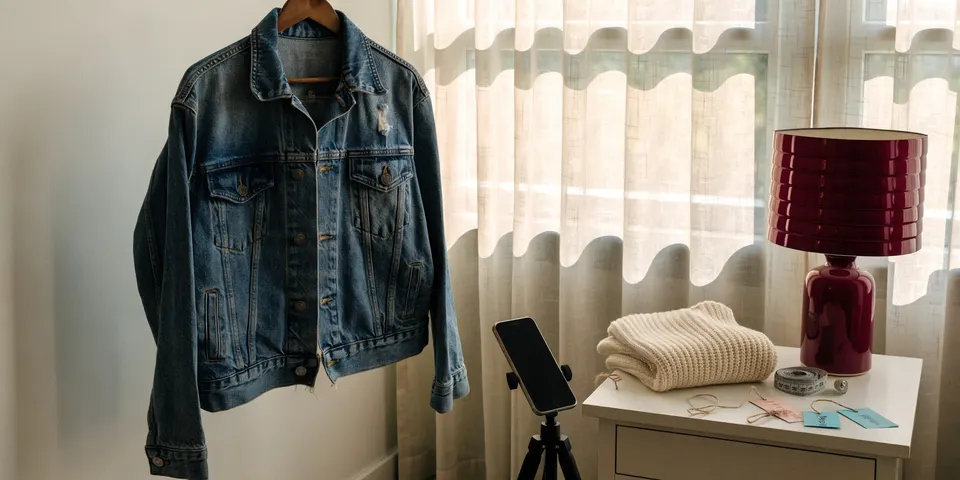
As a designer I can tell you: on these platforms, the photo decides everything. The same jacket sells in two days with daylight and a plain wall — and sits for weeks on a crumpled bedspread. AI writes the text now; your job is the eye.
02 Is this for you?
- enjoy flea markets, thrift shops and finding hidden treasures
- have an eye for brands, materials and quality
- can take clean photos and pack carefully
- like sustainability — things get a second life
- want income you can scale up or down at any time
- hate packing parcels and going to the post office
- want passive income — every sale is a bit of work
- don’t have any space to store items
- would sell copies of designer items
- don’t want to answer buyer questions
03 Private or business? Know the line
This is the most important point of the whole guide. Selling your own used things is private. Once you buy items in order to resell them for a profit, you are acting as a business — even as a side hustle.
04 What AI changes
Most of the time per item used to go into writing and researching. AI takes that over — so you can list three times as much in the same evening.


05 Step by step — from wardrobe to small business
All ten steps, nothing held back. Steps 1 to 7 work with your own things; steps 8 to 10 are for when you want to grow.
Go through wardrobe, cellar and shelves. Make three piles: sell, donate, throw away. Good candidates: branded clothes, shoes, jackets, bags, small furniture, lamps, cameras, games, records, kitchen appliances.
Clothes and accessories sell well on Vinted, where selling is free for private sellers and the buyer pays a fee. Tech, collectibles and almost everything else work on eBay, where private sellers in Germany pay no selling commission. Furniture and bulky items go to local classifieds for pick-up.
Daylight from the side, a plain wall or sheet, a hanger or a clean surface. Take the front, back, label, details and every flaw. Five to eight photos per item.
Look at sold items, not just listed ones — on eBay you can filter for sold listings. Note five comparable prices and let AI suggest a range. Start slightly above your minimum so you have room for offers.
Ship within one or two days, pack well, keep the receipt. Most platforms offer prepaid shipping labels. Fast, careful shipping brings good ratings — and ratings bring sales.
Once you start buying items to resell, register a business (in Germany: a trade registration, usually quick and cheap), switch to business accounts (Vinted Pro, eBay business account) and keep your receipts. Ask a tax adviser or your tax office about the small-business rule for VAT.
Flea markets, thrift and charity shops, house clearances, end-of-season sales, local classifieds with “must go today”. Stick to categories you know — knowledge is your edge. Buy only what you could sell for at least twice the price.
Note purchase price, sale price, fees, shipping and time for every item. After a month you’ll see which categories pay off. Specialise there — vintage denim, designer bags, retro tech, mid-century lamps. Specialists sell faster and at better prices.
06 Tools
Your phone, a free AI assistant and the platforms themselves are enough to start.
07 Realistic expectations
Clearing out often brings a few hundred euros over some weeks. As a business, income depends on how many items you find, photograph and ship — and on knowing what you’re buying. Many small resellers earn a useful side income; full-time needs volume, storage and good sourcing.
What one item can bring — a worked example
Invented example numbers. Not every item sells, and some sell below your hopes — your average counts, not your best sale.
08 Tips & common mistakes
- Do: Show every flaw in a photo — it prevents returns and bad ratings.
- Do: Price from sold items, not from wishful listings.
- Do: Ship within one or two days.
- Do: Register a business as soon as you buy to resell.
- Avoid: Reselling on a personal account as if it were private.
- Avoid: Selling copies of designer items — that’s illegal.
- Avoid: Trusting AI on brand or era without checking.
- Avoid: Buying everything cheap at the flea market without knowing if it sells.
09 Pros & cons
- Start with zero money using your own things
- Fast first sales
- Sustainable — things get a second life
- Flexible: more or less work whenever you like
- AI saves most of the writing time
- Every sale is manual work
- Space for storage and packing
- Returns and difficult buyers
- As a business: registration, tax, buyer rights
- Margins depend on your knowledge
10 Risks & legal
- Private vs business: buying to resell is a business. Use business accounts, register your trade, and don’t pose as a private seller — that can be an unfair commercial practice.
- Tax: platforms report sellers with 30+ sales or €2,000+ per year to the tax office. Private sales of everyday items are generally tax-free in Germany; business profits are taxable.
- Buyer rights: business sellers must give consumers a withdrawal right and warranty; private sellers can usually exclude warranty but must describe honestly.
- Counterfeits: never sell copies of branded goods. If you’re unsure whether an item is genuine, don’t sell it as genuine.
- Restricted items: some items aren’t allowed or need care (e.g. cosmetics, children’s car seats, recalled products). Check the platform’s rules.
- Scams: never leave the platform for payment, and never ship before payment is confirmed in the app.
General information only, not legal or tax advice. Rules differ by country and platform and change — check the current platform terms and ask a tax adviser once you sell as a business.
11 FAQ
Do I have to pay tax on selling my old clothes?
In Germany, selling everyday items you used yourself is generally tax-free. It’s different once you buy things to resell — then profits are business income.
When does the platform report me?
From 30 sales or €2,000 per year on one platform, it reports you to the tax office. That alone doesn’t mean you owe tax, but keep your records.
Can I resell on my normal Vinted account?
No. Vinted’s rules say personal accounts are for private, non-commercial use. If you buy items to resell, you need a Vinted Pro account and a registered business.
Which platform is best?
Clothes: Vinted. Tech and collectibles: eBay. Furniture: local classifieds for pick-up. Many sellers use two or three platforms.
How do I find the right price?
Look at sold items, not listed ones. Collect five comparable prices and let AI suggest a range. Leave a little room for offers.
Can AI recognise brands and values?
It can help with clues from labels and photos, but it makes mistakes. Always verify before you state a brand, era or value in a listing.
How much can I earn?
Clearing out often brings a few hundred euros. As a business it depends on volume and knowledge — many make a useful side income.
What should I never sell?
Fakes, recalled products and items the platform bans. When in doubt, check the platform’s rules.
The Reselling Starter Kit
- Private or business? The checklist
- Photo setup & shot list for clothes, furniture and tech
- AI prompt pack: listing, measurements, price research
- Pricing sheet with platform comparison
- Sourcing guide: where to find good items
- Sales tracker & profit calculator