
On this page
01 How it works
You make jewellery by hand — beaded bracelets, earrings from silver wire, macramé, pieces from recycled materials, resin or clay — and sell it online and at markets. People don’t buy handmade jewellery because they need another ring. They buy it because they like the style, the person behind it and the story of the piece. That’s your advantage over mass-produced jewellery, and it’s the part no factory can copy.
Most small jewellery shops sell on Etsy, on their own website, on Instagram and at Christmas and craft markets. A few also sell through local boutiques on commission. Start with one channel and one small collection, not with everything at once.
- Style
- Make
- Photos
- Shop
- Ship
- Regulars
02 Is this for you?
- like working with your hands for hours
- have an eye for colours, shapes and details
- enjoy photographing and showing your work
- are patient with small, fiddly steps
- like talking to customers at a market stall
- want to resell cheap jewellery as “handmade”
- hope for big money in the first months
- don’t want to calculate your hourly rate honestly
- find packing and shipping boring
- can’t take a quiet market day calmly
03 Before you start: materials and the rules
Jewellery touches skin for hours, so the EU has clear rules for it. They mostly concern the metal parts — wires, chains, hooks, clasps and earring posts. You are responsible for what you sell, even if you bought the parts. So buy from suppliers who state the material and confirm compliance.
04 What AI changes
The jewellery itself stays handmade — that’s the whole point. AI takes over the work around it that used to eat your evenings: texts, keywords, posts and the maths.

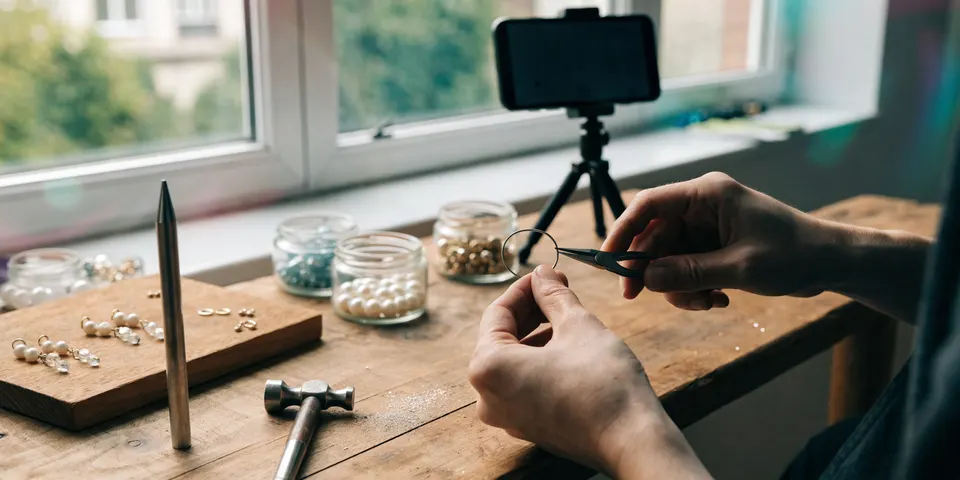
From my design work I know: people rarely buy the object, they buy the feeling behind it. A ring that a person made at their bench, with a short note about where the stone comes from, beats a perfect factory ring. Show your hands, show the process — that’s your marketing.
05 Step by step — from first piece to a small, steady shop
All ten steps. Steps 1 to 5 build your collection and your basics, steps 6 to 10 bring the sales.
“Jewellery” is too wide. Choose one material, one look and one kind of person: minimalist silver for everyday, colourful beads for festivals, pieces from old cutlery, macramé with natural stones. A clear style makes you easy to remember — and easy to find.
Courses at an adult education centre, workshops by jewellers and good video tutorials are enough to start. Make at least 20 to 30 pieces before you sell — your first ones go to friends, not to customers. Wear your own pieces for a few weeks: do hooks bend, does colour rub off?
Buy findings, chains and wire from suppliers who state the alloy and confirm nickel limits — ideally from the EU. Keep invoices and statements in one folder. Sterling silver (925), stainless steel and titanium are good choices for sensitive skin.
Material + your time × hourly rate + fees and packaging. Many beginners forget their time and sell below cost. A simple rule from the trade: your shop price should be about twice what it costs you — so a boutique can later buy at half price and you still earn.
If you sell regularly, you need a registered business (Gewerbe) — even for a small side shop. Get a tax number and decide on the small-business rule: since 2025 you can use it if your turnover was max. €25,000 last year and stays below €100,000 this year. Register in the LUCID packaging register before your first parcel.
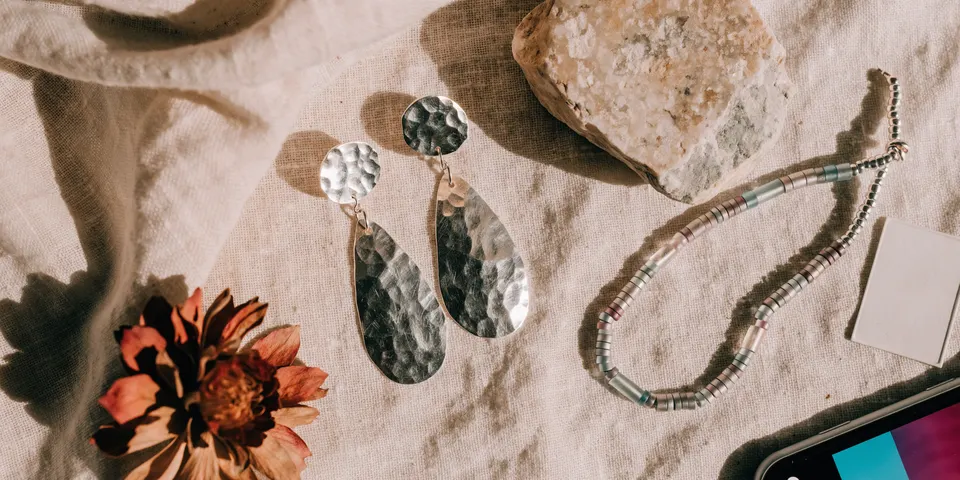
Daylight by a window, a calm background, one close-up, one photo on skin (a hand or an ear is enough, no face needed), one photo that shows the size, one of the packaging. Always the real piece. AI may remove dust or tidy the background — it must not change the jewellery.
Etsy is the easiest start: you pay a small listing fee per item and a share of each sale. Write titles with the words people really search for, describe material, size and care, and add a short line about how the piece is made.
A small box, a cotton pouch, a care card and a handwritten thank you — unboxing photos are free advertising. Use tracked shipping for anything above about €30, and say clearly in the shop how long making and shipping take.
Christmas markets, craft fairs and design markets are where many jewellers make their best sales — and meet their regulars. Online, short videos of your hands at work do better than perfect product photos.
Ask happy customers for a review, keep a small mailing list and offer custom pieces — initials, birth stones, a matching set for a wedding. Later, local boutiques or concept stores can take your pieces on commission or buy them at wholesale prices.
06 Tools
Your tools for the craft you know best. These help with the business side.
07 Realistic expectations
Most jewellery shops start slowly: a few sales a month online, more at markets. It takes a while until your shop has reviews and Etsy shows it more often. The good news: you don’t lose much while you wait, because you make most pieces in small numbers.
What it can look like — a worked example
Invented example numbers with the small-business rule (no VAT). In the side start that is about €15 per hour — fine for a start, but your prices should rise with your skill and your reviews. Etsy’s fees are charged in your shop currency and can change; check them in your shop settings.
08 Tips & common mistakes
- Do: Wear-test your own pieces for a few weeks before you sell them.
- Do: Keep supplier statements for every metal part.
- Do: Count your time in every price.
- Do: Build a small collection that looks like it belongs together.
- Avoid: Buying the cheapest findings from unknown sellers.
- Avoid: Healing promises for stones.
- Avoid: AI pictures instead of photos of the real piece.
- Avoid: Selling far below your cost because “it’s only a hobby”.
09 Pros & cons
- Very low start costs
- Real, creative work you can be proud of
- Handmade has loyal buyers
- Works online and at local markets
- Custom orders bring higher prices
- Your time limits your income
- Lots of competition on Etsy
- Very seasonal — Christmas is half the year
- Material rules need care
- Platform fees and ads cost more than you think
10 Risks & legal
- Business and tax: register a business if you sell regularly, keep receipts and decide on the small-business rule. Sales on platforms are reported to the tax office (Platform Tax Transparency Act).
- Materials: nickel, lead and cadmium limits apply to every metal part (REACH). You are responsible even for bought parts — keep supplier statements.
- Honest descriptions: correct fineness marks, correct names (plated, filled, solid) and no health claims for stones or copper.
- Shop duties: imprint, privacy policy, terms, a correct withdrawal notice (14 days — custom pieces made to the customer’s wishes are an exception) and prices incl. VAT where it applies.
- Product safety: GPSR information with your name and address, and warnings where needed. Jewellery for children may count as a toy.
- Copying: designs from big brands and other makers are protected. Your own ideas are your best protection.
- Packaging: register in the LUCID packaging register and join a packaging scheme before you ship.
General information only, not legal or tax advice. Check current rules with your local chamber or a tax advisor before you start.
11 FAQ
Do I need training to sell jewellery?
No formal training is required for simple handmade jewellery like beads, wire or macramé. If you want to work with solder, casting and precious metals professionally, a course with a goldsmith is worth it — and your local chamber can tell you whether your work counts as a craft trade.
Can I sell as a hobby without a business?
Selling a few pieces once is fine. If you sell regularly and want to make a profit, you need a registered business. Etsy and other platforms report your sales to the tax office.
Do I have to stamp silver jewellery with 925?
In Germany a stamp is not compulsory. If you stamp it or write a fineness in the shop, it must be correct.
How do I know my material is safe?
Buy from suppliers who state the alloy and confirm nickel, lead and cadmium limits in writing. Sterling silver, stainless steel and titanium are good for sensitive skin.
What sells best?
Pieces with a clear style and a reason to buy: everyday minimal jewellery, personal pieces with initials or birth stones, wedding and gift sets. Prices between €25 and €80 are typical for small shops.
Etsy or my own shop?
Start on Etsy, because buyers already search there. Build your own shop and a mailing list once you have regulars, so you’re not dependent on one platform.
Can I use AI for my designs?
For ideas, mood boards and sketches, yes. The piece itself should be made by you — that’s what handmade buyers pay for, and what Etsy expects.
Do customers have a right to return custom pieces?
Pieces made to the customer’s wishes (e.g. with an engraved name) are usually excluded from the 14-day withdrawal right. Say so clearly in the shop before the order.
The Handmade Jewellery Starter Kit
- Style & collection planner
- Price calculator for materials and your time
- Material & safety checklist (nickel, lead, silver marks)
- Photo shot list for every piece
- Shop listing & keyword templates
- Market & season planner