On this page
01 How it works
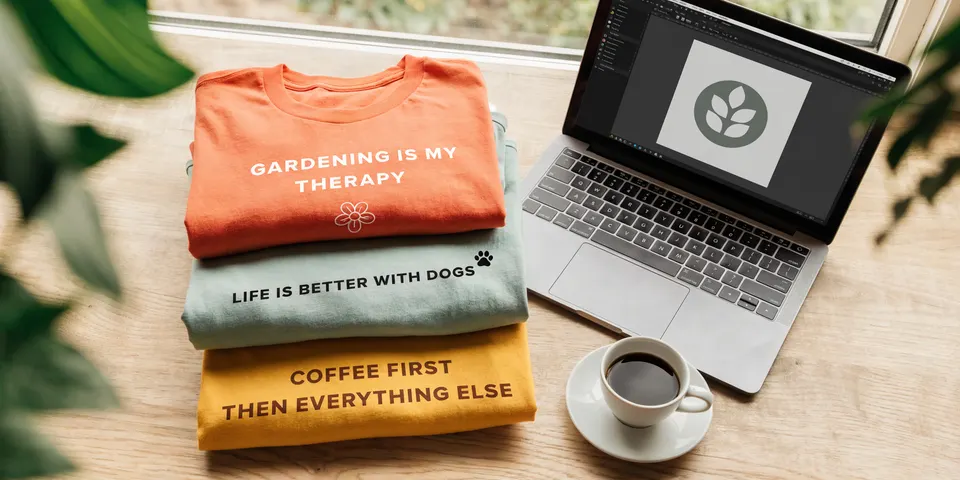
Merch on Demand (it used to be called Merch by Amazon) is Amazon’s own print-on-demand program for clothing and a few other products. “Print-on-demand” means nothing is printed in advance. You create a design — often just a clever line of text and a simple graphic — and upload it as an image file. You pick the products (T-shirts, hoodies, sweatshirts, long sleeves, tank tops and more), the colors and the price. Amazon creates the product page for you.
When a customer orders, Amazon prints the design, packs it, ships it, handles returns and customer service, and pays you a royalty — your share of each sale. You never touch a shirt, never pay for stock and never talk to a customer. Your listings can appear on Amazon in the US and several European marketplaces, and in Japan.
- Apply & get approved
- Research a niche
- Design with AI help
- Trademark check
- Upload & write listing
- Amazon prints & ships
- You get a royalty
The catch: you can’t just sign up and start. You apply, Amazon reviews your request, and if you get in, you start with a small upload limit. More upload slots come with sales. More on that below.
Three ways to build it:
02 Is this for you?
- like words, jokes and small ideas that make people smile
- enjoy researching what people care about
- can be patient for months before things add up
- are careful with rules — especially trademarks
- want a side business with no stock and no customer service
- need money this month
- want to start uploading today (approval can take weeks)
- expect one design to go viral and pay the rent
- don’t want to check trademarks for every single phrase
- hate repetitive work like writing listings
03 The “saturated” myth — where the money really is
Search for “funny shirt” on Amazon and you’ll find what feels like millions of them. Many people stop right there: “Too late. Everyone is doing it.” But nobody buys “a funny shirt”. A daughter buys a shirt for her dad who restores old tractors. A night-shift ER nurse buys one that gets her exact kind of humor. A family buys matching shirts for a camping trip. Each of those is its own small market — with its own words, jokes and pride.

I started selling shirts on Amazon in 2018. Back then everyone already told me it was saturated. It wasn’t — and it still isn’t. The people who win do their niche research, make designs their buyers actually recognise themselves in, and keep uploading week after week.
The money sits in three places:
- A sharp niche — a group of people with a strong identity, hobby or job, where the top shirts are few, generic or badly made.
- Designs that speak their language — insider words, real situations, the joke only they get. Clean and readable at thumbnail size.
- Consistency — many good designs over months. Every design is a small lottery ticket; with good research, the odds get much better.
Broad vs. sharp: what a good niche looks like
04 What AI changes
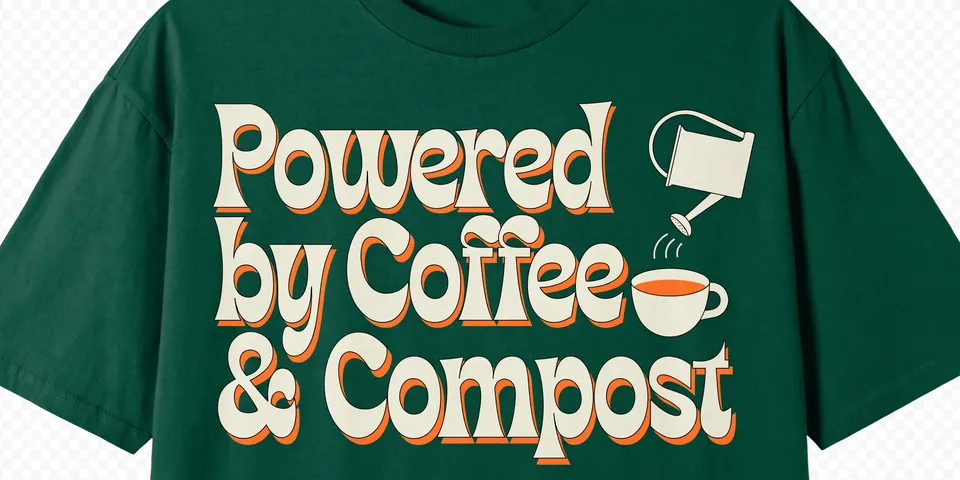
Shirt designs used to need two things: good ideas and design skills. If you had neither, you paid a designer for every single file. Today AI helps you on both sides. It brainstorms angles and slogans for a niche in seconds. It creates simple icons, badges and illustrations you can place under your text. And it helps you write clean, keyword-rich listings.
Where AI still needs you: it doesn’t know which niches buy. It happily writes slogans that are registered trademarks — without warning you. It makes spelling mistakes inside images, and it produces generic jokes that a hundred other sellers have already uploaded. Amazon judges every design by the same rules — content, intellectual property, quality — no matter how it was made. Your research and your judgement are the real product.
05 Step by step — the complete process
All ten steps from application to a growing design portfolio. Nothing held back. Plan several weeks for approval and your first batch of designs.
Go to merch.amazon.com and request an account. Amazon asks for your details, tax information and a bank account for payouts. There’s usually a short field where you describe what you plan to create — take it seriously.
- Write complete sentences: which niches, what kind of designs, why you.
- If you have a portfolio, a website or other designs, mention it. Only show your own original work — no brands, no characters.
- Use your real, matching data (name, address, bank, tax). Mismatches slow things down.
- Be patient. Reviews can take anywhere from days to many weeks, and approval isn’t guaranteed. If you’re declined, you can improve your description and apply again later.
New accounts start with a small number of design slots. When your designs sell, Amazon reviews your account from time to time and gives you more slots — the program calls these levels tiers. You can’t buy your way up; only sales count. Designs that don’t sell for a long time may be removed, which frees up space again.
What this means for you: at the start every slot is precious. Don’t fill them with random ideas. Put your best-researched designs first.
This step decides most of your result. Honestly, spend more time here than on design.
- Type a niche into the Amazon search bar and note the autocomplete suggestions — those are real searches.
- Search the niche + “shirt” in the Clothing category. Look at the Best Sellers Rank (BSR) of the top results: a lower number means more sales. Several shirts with steady ranks mean real demand.
- Count how many results really fit. Few good, specific designs = opportunity. Hundreds of near-identical ones = go narrower.
- Go where your buyers talk: Facebook groups, Reddit, forums, YouTube comments. Write down the words, jokes and complaints they use.
- Keep a simple list: niche, sub-niche, sample phrases, competition, trademark check done yes/no.
Most sellers start with text designs — and many best-sellers are exactly that: a great line in a strong font. Add a simple graphic when it helps the joke or the pride. Keep it readable from two meters away and at thumbnail size.
- Put the text into the design yourself in Canva, Kittl, Affinity or Photoshop — you control spelling and fonts.
- Use fonts with a commercial license.
- Make light and dark versions so the design works on different shirt colors.
This is the most important safety step. I’ve seen good accounts lose designs over it. Many harmless-sounding phrases are registered trademarks for clothing. If you upload one, Amazon may reject the design — and repeated violations can get your account suspended or closed.
- Search every phrase, word by word and as a whole, in the USPTO Trademark Search (US), EUIPO eSearch (EU) and TMview (many countries at once). For Germany, also check the DPMA register.
- Pay special attention to registrations for clothing (Nice class 25) and “live” or “registered” status.
- Also check brands, sports teams, events, TV shows, famous people and song lyrics. None of them belong on your shirt, in your title or your keywords.
- When in doubt, leave it out. There are always other phrases.
- Use the template and file size from the Merch on Demand resources section (PNG, large, transparent background).
- Remove backgrounds cleanly and upscale small AI images with a quality tool.
- Avoid very thin lines, tiny text and soft transparent edges — they print badly.
- Zoom to 100 % and look for stray pixels, typos and AI glitches before you upload.
Amazon shows your shirt only if the words match what people search. You get a brand name, a title, two bullet points and a description.
- Title: niche + main phrase + product, e.g. “Retired Fly Fishing Grandpa – Funny Fishing Gift”.
- Bullets: who it’s for, the occasion (birthday, retirement, Father’s Day), what makes it special.
- Use a consistent brand name for one niche or series — no famous brand names, not even “inspired by”.
- No trademarked words in the listing either. Amazon checks the text, not only the image.
- Start with the classic T-shirt, then add hoodies, sweatshirts and long sleeves for the same design — one design, several products.
- Choose shirt colors that fit the niche and make the design pop.
- Select the marketplaces where your design makes sense. A German pun belongs on Amazon.de, a US holiday on Amazon.com.
- Set prices in the normal range of your niche. Amazon shows your royalty while you set the price.
- Upload steadily — a few designs every week beats one big rush.
- Designs go through Amazon’s review before they are live. Read every rejection carefully and learn from it.
- Keep a simple sheet: design, niche, upload date, sales. After a few months you see which niches work.
- When a design sells, make more in the same niche: new phrases, other occasions, related sub-niches.
- Upload seasonal designs well ahead of time — Christmas designs in early autumn.
- As your tier grows, test more niches, but keep the research standard high.
- Once you have proven designs, use them elsewhere too: Etsy with a print-on-demand partner, or your own brand store.
- Stay patient. Most sellers who give up do it in the first months — just before things start to stack up.
06 Tools
Research first — it matters more then any design tool. Everything else you can swap later.
07 Realistic expectations
Honestly: most designs never sell. That’s normal in print-on-demand, not a sign of failure. A few designs carry the portfolio, and you can’t predict which ones. At the start, your small upload limit also slows you down — you need sales to get more slots, and you need slots to get more sales. The sellers who make it through treat it like a long game: careful research, steady uploads, clean trademark checks, and learning from every sale. Sales are seasonal, too; judge your results over a full year.
08 Tips & common mistakes
- Do: Research every niche before designing. A great design in a dead niche doesn’t sell.
- Do: Check every phrase in the trademark databases — design, title, bullets and brand name.
- Do: Keep designs simple and readable at thumbnail size.
- Do: Upload seasonal designs weeks to months before the season starts.
- Avoid: Copying a best-seller and changing one word. That’s copying — and a fast way to lose your account.
- Avoid: Using brands, sports teams, movie quotes or celebrity names — even in keywords.
- Avoid: Wasting your first slots on random, untested ideas.
- Avoid: Giving up after two months because the first designs didn’t sell.
09 Pros & cons
- No stock, no shipping, no customer service
- Amazon’s huge customer base and trust
- Very low start costs
- AI speeds up ideas, graphics and listings
- Designs can sell for years
- Application and approval — not open to everyone
- Small upload limit at the start
- You fully depend on Amazon’s rules and decisions
- Trademark mistakes can end your account
- Most designs don’t sell; results take patience
10 Risks & legal
- Trademarks: The number-one risk. Many common phrases are registered for clothing. Check USPTO, EUIPO, TMview (and DPMA for Germany) before every upload. Repeated violations can lead to suspension or termination of your account.
- Copyright: Never copy other sellers’ designs, artwork, characters, song lyrics or quotes. Use your own ideas, your own graphics and licensed fonts.
- Rights of personality: No names, faces or likenesses of real people, especially celebrities.
- AI content: Amazon treats AI-assisted designs like any other design: you must hold the rights and meet the content and quality rules. In many countries purely AI-generated images may not be protected by copyright, so your own text, layout and edits matter.
- Platform dependency: Amazon can change products, limits, royalties or rules at any time and remove designs without much explanation. Build a second channel over time.
- Content policy: No hateful, offensive or misleading content. Read the current Merch on Demand content policy before your first upload.
- Taxes: Royalties are income. You provide tax information when you join; check with a tax advisor what applies where you live.
General information, not legal advice.
11 FAQ
Do I need to be a designer?
No. Many successful designs are strong text in a good font, sometimes with a simple graphic. AI and tools like Canva or Kittl cover the rest. What you really need is research skill and a good eye for what your niche finds funny or proud.
Can I use AI images on Merch on Demand?
Yes, AI-assisted designs are judged by the same rules as all other designs: you need the rights, no trademarks or copied content, and good print quality. Check the current content policy before you upload.
How long does approval take?
It varies a lot — from a few days to several weeks, sometimes longer. It isn’t guaranteed. Use the time to research niches and prepare your first designs.
Isn’t the market saturated?
Broad searches are crowded, yes. Sharp niches often aren’t. Daniel started selling Amazon shirts in 2018, when everyone already said it was too late. The key is niche research, designs that speak the buyer’s language, and steady uploads.
Merch on Demand or Etsy — where should I start?
If you get approved, Merch on Demand is the easiest start: Amazon does everything after the upload. While you wait, or in parallel, Etsy with a print-on-demand partner is a good second channel for the same designs.
The Merch Niche Kit
- 50 niche ideas with sub-niches, pre-sorted
- Niche research worksheet (step by step)
- Trademark check routine: USPTO, EUIPO, DPMA
- AI prompt pack for slogans & simple graphics
- Listing template: title, bullets, description
- Pre-upload checklist for every design