On this page
01 How it works
You pick a clearly defined group of readers with one cooking problem, collect and test recipes that solve it, and turn them into a book. AI takes over the typing, structuring, food photography and much of the layout. The finished book goes live on Amazon KDP as an e-book and printed book — Amazon prints each copy on demand, ships it and pays you a royalty. No stock, no upfront print run.
- Find a niche
- Collect recipes
- Write with AI
- Test-cook
- AI food photos
- Layout & cover
- Publish & promote
There are three ways to earn with the same skill set:
02 Is this for you?
- cook regularly and have dishes people ask for
- like the idea of a product that sells while you sleep
- enjoy a bit of research and design
- can wait a few months for real results
- want a low-risk first project with AI
- need money this month
- don’t want to cook-test recipes
- expect AI to do everything without you
- hate the idea of marketing your own work
- want to publish one book and never touch it again
03 The “saturated” myth — where the money really is
Search “cookbook” on Amazon and you’ll find hundreds of thousands of results. That scares most people off — and that’s exactly why it works for the ones who stay. Nobody searches for “a cookbook”. People search for their problem: quick dinners after a late shift, air fryer meals for two, gluten-free birthday cakes for kids.

Everyone told me cookbooks were saturated. My cookbook for teenagers still reached #11 of all books on Amazon.de, and my air fryer cookbook made it into the overall top 100. The market was never the problem. The niche, the research and the design were the whole game.
Money in this category sits in three places:
- A sharp niche — a specific reader with a specific problem, where the top books are few, dated or badly reviewed.
- A cover and title that win the thumbnail — on Amazon your cover is a stamp-sized image next to 50 others. It has to say “this is for you” in one second.
- Consistency — book two and three in the same niche sell book one. A series outperforms any single title.
Broad vs. sharp: what a good niche looks like
04 What AI changes
Five years ago, a cookbook meant months of typing, formatting — and one very expensive line item: food photography. A professional food photographer plus stylist for 40 dishes easily costs more than a first book will earn in a year. That was the real entry barrier. It’s gone.
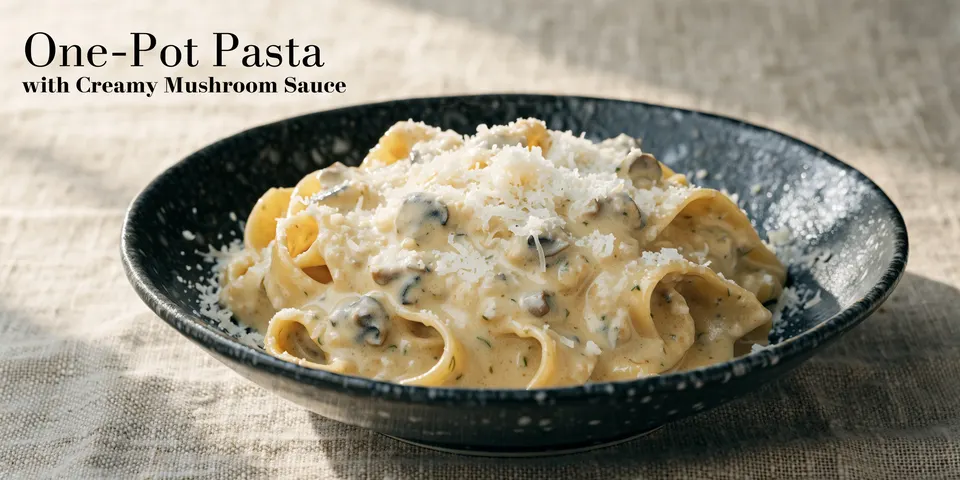
What AI does not do for you: choose the niche, taste the food and decide what goes in the book. That’s why these books still need you — and why lazy, 100% AI books without testing get bad reviews and disappear.
05 Step by step — the complete process
All ten steps, from zero to a book that sells. Plan roughly six weeks for your first book if you work on it a few evenings a week.
Spend more time here then anywhere else. A good niche decides 80% of the outcome.
- Type your idea into the Amazon search bar and note the autocomplete suggestions — those are real searches.
- Open the top 10 books. Check the Best Sellers Rank on each: if several of them sell steadily, there is demand.
- Read the 3-star reviews. What readers miss (“too complicated”, “no photos”, “ingredients hard to find”) is your angle.
- Look at the covers. If the top results look dated or generic, a modern book has a real chance.
Write one sentence: “This book helps [reader] to [result] without [pain].” Example: “This book helps busy parents get a warm dinner on the table in 20 minutes without a second shopping trip.” Every recipe, photo and cover decision gets checked against this sentence.
Your title follows from it: main promise + reader + number, e.g. “The 20-Minute Family Cookbook: 60 Easy Weeknight Dinners for Busy Parents”.
Aim for 40–60 recipes for a printed book, 25–30 for a short e-book or PDF. Build 4–6 chapters that match your reader’s day (breakfast, lunchbox, dinner, sweets …) and use a spreadsheet: recipe name, chapter, source, status (draft / tested / photographed).
Talk, don’t type — honestly, my favourite trick: record yourself explaining a dish on your phone, transcribe it and let AI turn it into a clean recipe. It keeps your voice and saves hours.
Every recipe gets cooked once from the written version — ideally by someone else. I learned that one the hard way. AI sometimes invents amounts, times or temperatures. One recipe that fails in a reader’s kitchen means a one-star review.
- Check amounts, temperatures and cooking times
- Mark allergens clearly (nuts, gluten, dairy, eggs …)
- Calculate nutrition values with a calculator tool if your niche needs them (fitness, diabetes-friendly …)
Define one visual style for the whole book first: plate style, background, light, angle. Then generate every dish in exactly that style — this consistency is what makes a book look premium.
Compare every image with the real recipe: right ingredients, realistic portion, colours that match. Upscale the final images so they print sharply.
Keep one recipe per page or spread, with the photo on the same page or opposite. Use a clean template — ingredient list left or top, steps numbered, generous white space. Decide early between colour print (looks great, costs more per copy) and a black-and-white interior with a colour e-book.
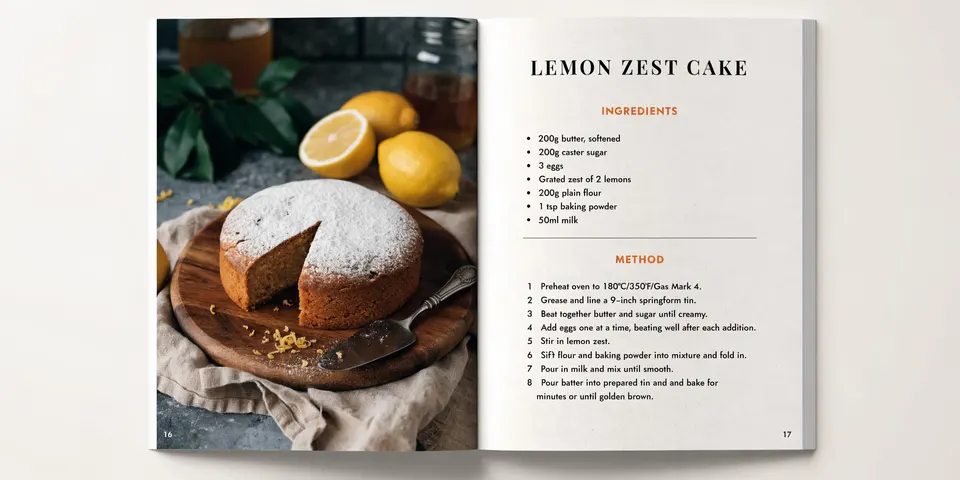
And the cover? It’s your most important sales tool. Test it as a thumbnail next to the top 10 books in your niche: can you read the title? Is the dish instantly recognisable? Does it stand out? One hero dish, big readable title, a subtitle with the promise — nothing more.
- Upload e-book and paperback (hardcover optional) — the same book, several formats.
- Fill all keyword fields with the phrases your readers really type (from step 1).
- Choose precise categories and write a description that sells the result, not the recipes.
- When asked about AI-generated content, answer honestly — AI images and texts must be declared.
- Order a printed proof copy before launch and check colours and margins.
- Ask friends and early readers for honest reviews — never buy reviews.
- Start small Amazon Ads campaigns on your best keywords and increase what works.
- Share recipe photos on Pinterest and Instagram with a link to the book.
- Plan book two in the same niche — a series sells itself far better than a single title.
- Translate your best book into a second language with AI and a native proofreader.
06 Tools
Start with niche research — it makes the biggest difference. Everything else you can swap later.
07 Realistic expectations
Honestly: most single cookbooks sell a few copies a month. Some take off, most don’t — and you can’t predict which one. The people who earn well treat it like a small publishing business: several books in one or two niches, steady improvements to covers and ads, and translations into other markets. Give it 6–12 months before you judge.
08 Tips & common mistakes
- Do: Write for one person: “you, after a 12-hour shift” — not “everyone who cooks”.
- Do: Use one consistent AI photo style for every dish. It makes the book look premium.
- Do: Put the promise on the cover. “60 dinners in 20 minutes” beats a pretty but vague title.
- Do: Plan a series from the start. Same design, same niche, new angle.
- Avoid: Publishing untested AI recipes. One failed cake means a bad review.
- Avoid: AI photos that don’t match the recipe. Readers notice — and say so in reviews.
- Avoid: A broad niche like “healthy recipes”. You’ll never be found.
- Avoid: Skipping allergen notes and the proof copy.
09 Pros & cons
- Very low start costs
- Sells for years once it ranks
- AI removes the biggest costs (photos, layout)
- Works in any language and market
- Great first AI project
- Slow start — months, not days
- Needs real testing time
- Depends on Amazon’s rules and algorithm
- Marketing is part of the job
- Single books rarely earn much alone
10 Risks & legal
- Copyright: Ingredient lists alone are rarely protected, but other authors’ texts, photos and layouts are. Write everything in your own words.
- AI disclosure: Amazon asks whether texts or images are AI-generated. Answer truthfully — hiding it can cost you your account.
- Food safety & allergens: You’re responsible for correct temperatures, times and allergen notes.
- Health claims: No promises like “cures”, “guaranteed weight loss” — that can be misleading advertising.
- Brand names: Don’t put trademarks (appliance brands etc.) in your title unless you’re allowed to.
- Taxes: Royalties are income. Check what applies to you where you live.
General information, not legal advice.
11 FAQ
Do I need to be a trained chef?
No. You need recipes that work and a clear reader. Many successful cookbooks come from home cooks — the niche and the testing matter more than a diploma.
Can I use AI images in a cookbook on Amazon?
Yes. You declare them as AI-generated during upload. Make sure every image shows the dish as it really turns out.
How many recipes do I need?
Around 40–60 for a printed book, 25–30 for a short e-book or PDF. Quality and a clear theme beat quantity.
E-book or paperback?
Both. It’s the same work, and many readers want a cookbook on paper — or as a gift.
Can I publish the same book in several languages?
Yes — and it’s one of the best ways to multiply one book. Translate with AI, then have a native speaker proofread.
The AI Cookbook Kit
- 50 cookbook niches, pre-checked
- The niche check: how to rate demand in 10 minutes
- 30 prompts for recipes, intros & descriptions
- Food photo prompt pack in one consistent style
- Recipe layout template
- Launch checklist for KDP