
On this page
01 How it works
A few years ago, people made money on Amazon with blank notebooks: a nice cover, 120 lined pages, done. That era is over. What still works — and works well — is the next step up: medium-content books. These are books people write in, solve or work through, but where the inside pages are the actual product: themed puzzles with answer keys, a gratitude journal with a new prompt and a short explanation every day, a budget planner that teaches you how to budget while you fill it in.
You pick a clear reader with a clear need, plan the interior so it genuinely helps them, let AI generate the puzzles, prompts and page designs, check everything yourself, and publish on Amazon KDP (Kindle Direct Publishing — Amazon’s self-publishing platform). Amazon prints each copy when someone orders it, ships it and pays you a royalty. No stock, no print run, no warehouse.
- Find a niche
- Define the reader
- Plan the interior
- Create pages with AI
- Check & test
- Cover & layout
- Publish & promote
There are three main book types in this space. Most people start with one and add the others later:
02 Is this for you?
- like puzzles, journaling, planning — or know people who do
- enjoy thinking about what makes a page genuinely useful
- have some life or work experience you could turn into prompts or guidance
- are patient enough to build a small catalogue over months
- want a low-risk, low-cost first project with AI
- want to upload 50 notebooks a week and forget about them
- need income this month
- don’t want to check puzzles and answer keys yourself
- expect AI to deliver a finished book with one click
- hate the idea of looking at your own work as a customer would
03 The “saturated” myth — and why low-content really stopped working
Let’s be honest about both halves of the story. First: the claim that “puzzle books and journals are saturated” is wrong. People buy puzzle books every single day — as gifts, for holidays, for grandparents, for kids on long car rides. Journals and planners sell every January, every back-to-school season, every Mother’s Day. The demand never went away.
Second: what did stop working is the pure low-content model. Amazon itself describes low-content books as books with minimal or no content on the interior pages — repetitive pages designed to be filled in by the user: notebooks, lined journals, blank logbooks. Three things changed:
- Amazon cracked down on copy-paste publishing. Its content guidelines say it may remove content that is typically disappointing to customers, and it doesn’t want duplicate or barely different versions of the same thing. Hundreds of near-identical notebooks with different covers is exactly that. Accounts that mass-upload this kind of book risk takedowns — or worse.
- Amazon limits how fast you can publish. KDP limits new titles to 2 per format each week. The “upload 100 notebooks this week” strategy simply no longer exists.
- Low-content books get fewer features. According to KDP’s own help pages, books marked as low-content can’t join a series, can’t use Expanded Distribution and don’t get a free KDP ISBN. Books with real content play in the full league.
- Customers learned. A blank lined notebook costs almost nothing at any supermarket. Nobody needs yours. A journal that actually walks them through something is a different product.

I’ve been doing print-on-demand since 2018, when everyone already said it was saturated. It never was. What dies is lazy work — and what grows is books that clearly help one specific reader.
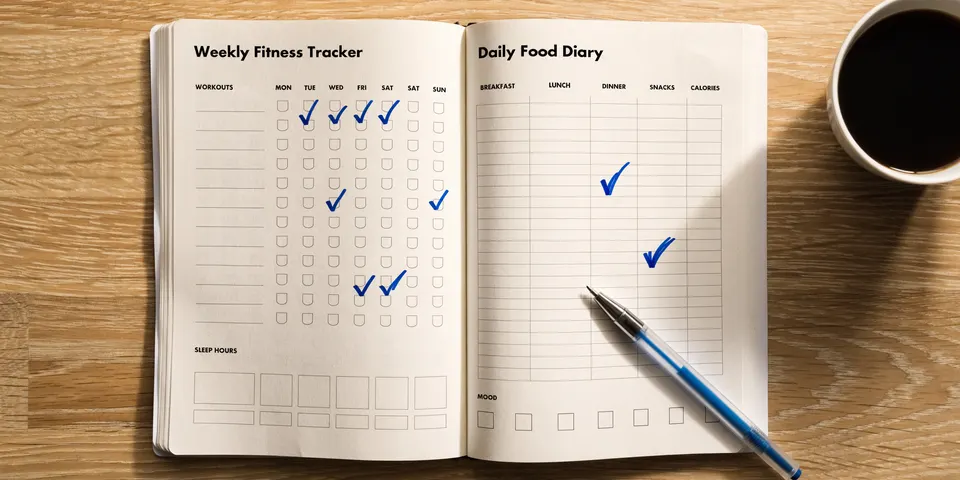
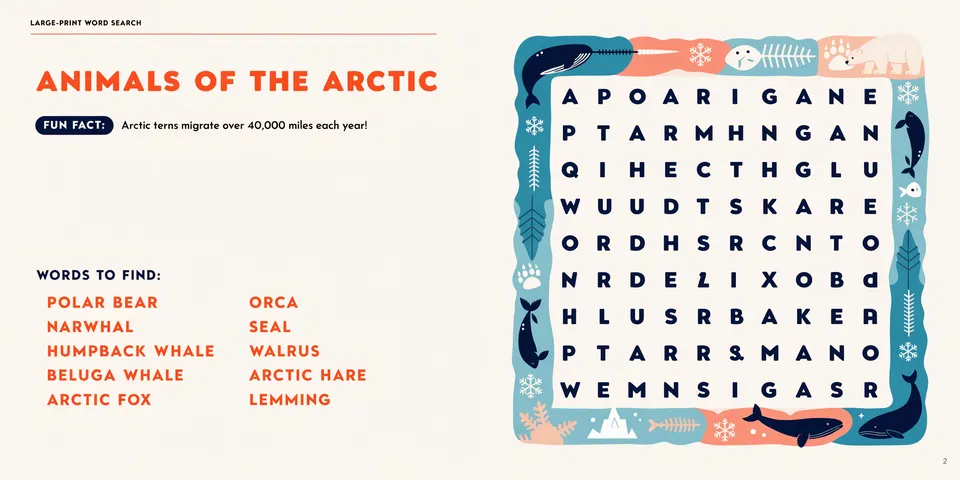
Low-content vs. medium-content: what the difference looks like
04 What AI changes
Medium-content used to be hard for one reason: making 150 good puzzles or 365 thoughtful prompts took weeks. Illustrations cost money. That’s why so many people took the lazy route and published blank pages. With AI, the hard part got fast — which means the quality route is now open to anyone willing to check the output.
What AI does not do reliably: build puzzles that are guaranteed solvable, get facts right every time, or know what your reader really struggles with. AI word searches with missing words, crosswords with clues that don’t fit, or trivia with wrong answers are the fastest way to one-star reviews. You are the quality control — that’s the job.
05 Step by step — the complete process
All ten steps, nothing held back. Plan roughly three to six weeks for your first book if you work on it a few evenings a week.
Honestly, this is where most of the result is decided. Look for a specific reader with a specific reason to buy — not “puzzle books”, but “large-print cat-themed word searches for seniors”.
- Type ideas into the Amazon search bar and write down the autocomplete suggestions. Those are real searches.
- Open the top 10 results. If several have a steady Best Sellers Rank, there is demand.
- Read the 1- to 3-star reviews: “print too small”, “words missing”, “prompts repeat”, “no answer key” — every complaint is your chance.
- Check the “Look inside” of the leaders. If they’re thin or lazy, a genuinely good book can win.
Write one sentence: “This book helps [reader] to [result] by [what’s inside].” Example: “This journal helps new managers get through their first 90 days with confidence by giving them one short lesson, one reflection prompt and one practical action per day.”
Your title follows from it: result + reader + format, e.g. “First 90 Days as a Manager: A Guided Journal with Daily Lessons, Prompts and Action Steps”.
And before any AI, sketch the structure on paper or in a spreadsheet. This is what separates you from the notebook crowd.
- A short intro: who the book is for and how to use it.
- Sections or chapters with a logic (weeks, themes, difficulty levels).
- Recurring page types — but each page with different content (a new prompt, a new puzzle, a new tip).
- Extras that add value: answer keys, a progress tracker, reflection pages, a “what I learned” summary.
- For puzzle books: a clear difficulty curve from easy to hard.
Use AI to create word lists, themes trivia, prompts, tips and short explanations. Work in batches and ask for more than you need — then keep only the best.
Feed the word lists into a puzzle generator (see Tools) to create the grids and answer keys. For logic puzzles and sudoku, use dedicated generators — they produce puzzles with exactly one solution, which AI chatbots alone can’t guarantee.
- Solve a sample of puzzles yourself — at least one per difficulty level.
- Check every answer key against its puzzle.
- Fact-check trivia and explanations. AI invents things with total confidence.
- Read prompts out loud: repetitive or strange ones get cut.
Pick one visual style for the whole book frist: line art or watercolour, colour palette, fonts. Then generate small illustrations, section headers and decorative elements in exactly that style.
For black-and-white interiors, check that the art prints cleanly without grey smudges. Upscale anything that will be printed large.
Get the trim size, margins and bleed right from the start (KDP’s help pages list the requirements and offer templates). For seniors, use large fonts and generous spacing. For journals, leave enough real writing space. Keep headers, page numbers and fonts consistent throughout.
On Amazon your cover is a tiny thumbnail next to dozens of others. It must say in one second who this is for and what’s inside: “Large Print”, “with Answers”, “90-Day Guided Journal”. One strong image, a big readable title, a clear subtitle. Test it by shrinking it next to the top 10 in your niche.
- Upload the paperback (hardcover optional). Puzzle books and journals are mainly print products.
- Answer the low-content question correctly: puzzle and activity books are usually not low-content — but KDP counts journals, prompt journals, planners and log books as low-content, even with good content. That only means no free KDP ISBN; the book can still sell.
- Fill the keyword fields with phrases your readers actually search for (from step 1), and pick precise categories.
- Write a description that sells the result and shows what’s inside: number of puzzles, types of prompts, extras.
- Declare AI-generated text and images when KDP asks. Order a proof copy and check it page by page.
- Ask early readers for honest reviews — never buy or swap reviews.
- Start small Amazon Ads campaigns on your best keywords, then scale what works.
- Plan seasonal timing: puzzle books before holidays, planners before January and back-to-school.
- Turn one winner into a series: Volume 2, a different difficulty level, a new theme for the same reader.
- Translate your best titles with AI plus a native proofreader to open new Amazon markets.
06 Tools
Start with niche research — it matters more than any design tool. Everything else can be swapped later.
07 Realistic expectations
Honestly: most single puzzle books or journals sell a handful of copies a month. Some catch a niche and sell steadily for years; many don’t, and you can’t predict which. The people who do well treat it as a small publishing business: a catalogue of books in a few related niches, series instead of one-offs, seasonal timing, careful ads and constant improvement of covers and descriptions. The upside of medium-content over low-content: your books are harder to copy and more likely to earn good reviews — which keeps them selling. Give it 6–12 months before you judge.
08 Tips & common mistakes
- Do: Build for one reader: “grandma with weak eyes who loves word searches” — not “everyone who likes puzzles”.
- Do: Put the value on the cover: “200 puzzles, large print, with solutions” or “90 days of prompts”.
- Do: Solve and read your own book before publishing. Be your harshest customer.
- Do: Think in series from the start: same design, same reader, new volume or theme.
- Avoid: Publishing blank or near-blank notebooks and hoping volume makes up for it.
- Avoid: Unchecked AI puzzles — missing words, wrong answer keys, unsolvable grids.
- Avoid: Copy-pasting the same book with a new cover and title. That’s what Amazon removes.
- Avoid: Tiny print, cramped writing space or grey, blurry illustrations in the print version.
09 Pros & cons
- Low start costs, no stock
- Real demand — gifts, seasons, hobbies
- AI makes quality content fast
- Harder to copy than low-content
- Books can sell for years; series stack up
- Slow start — months, not days
- Checking puzzles and facts takes real time
- Depends on Amazon’s rules and algorithm
- Marketing is part of the job
- Single titles rarely earn much alone
10 Risks & legal
- Platform rules: Amazon can remove books it sees as duplicate, barely differentiated or disappointing — and in serious cases close accounts. Every book needs its own real value.
- AI disclosure: KDP asks whether text, images or translations are AI-generated. Answer truthfully. Using AI only to edit or polish your own work usually doesn’t need to be declared.
- Copyright: Don’t copy other authors’ prompts, puzzles, quotes or layouts. Quotes from famous people may still be under copyright — check before using them in a journal.
- Trademarks: No brand names, sports teams, TV shows or characters in titles, covers or puzzle themes unless you have permission.
- Health & mental health claims: A wellbeing journal is not therapy. Avoid promises like “heals anxiety” and add a note to seek professional help where appropriate.
- Kids’ books: Content for children needs extra care — age-appropriate words, correct facts, nothing scary or inappropriate in AI-generated art.
- Taxes: Royalties are income. Check what applies where you live.
General information, not legal advice.
11 FAQ
Are low-content books banned on Amazon?
No. Amazon still allows them and even has a special setting for them. But duplicate, barely different or disappointing books get removed, weekly title limits stop mass uploads, and low-content books get fewer features. As a business model, blank notebooks are no longer worth your time. Medium-content is.
Is a puzzle book a low-content book?
Usually not. Amazon’s own description of low-content books says activity books like puzzles are typically excluded. A book full of real puzzles with answer keys has content — that’s the point.
Can I use AI to make the puzzles and prompts?
Yes. Use dedicated generators for the puzzles themselves and AI for themes, word lists, prompts and explanations. Then check everything — and declare AI-generated content when KDP asks.
How many puzzles or prompts does a book need?
Enough that the book feels generous for its reader — look at what the best-reviewed books in your niche offer and aim to beat them on quality, not just count. For journals, a clear time frame (30, 90, 365 days) works well.
Should I sell on Etsy too?
It’s a great addition. Printable PDF journals and planners sell well on Etsy, and one interior can often be adapted for both — a paperback on Amazon and a digital download on Etsy.
The Medium-Content Book Kit
- 40 medium-content niches with a clear reader
- The “is it more than a notebook?” check
- 25 prompts for puzzles, journal prompts & explanations
- Interior page plan for a guided journal
- Puzzle quality checklist (solvable, answer keys, print size)
- Launch checklist for KDP